AFBombay

| Reflexive Verbs |
When something does something to itself, a reflexive pronoun is used. The reflexive
pronouns are exactly like the direct object pronouns except for the third person
singular and plural forms.
Definition A pronominal verb (also called a reflexive verb) is a verb like se lever or se coucher which takes a reflexive pronoun (one which refers back to the verb’s subject). The reflexive pronouns are me, te, se, nous and vous.
Il se réveille à sept heures. Il se couche à 10 heures
When used in compound tenses like the perfect, pronominal verbs always take the auxiliary être:
Je me suis réveillé à sept heures
In compound tenses the participle must agree with the subject: (more…)
These verbs are conjugated like normal verbs, but they require an extra pronoun before the verb. Most indicate a reflexive action but not all. And therefore literal translation should be avoided. .
Some reflexive verbs:
Pour lire la suite
A pronominal verb (also called a reflexive verb) is a verb like
se lever, se laver, se dépêcher, se nourrir, s’évanouir, s’évader
which takes a reflexive pronoun (one which refers back to the verb’s subject).
The reflexive pronouns are
| Me | te | se | nous | vous | se |
Pouvoir and vouloir are are very similar . They are both irregular and very important in the communicative process so not to be confused. Learn them together in order to benefit from the similarities and also in order to get the differences clear.
First, some help to distinguish the meanings. (more…)
To Receive
| reçois | recevons | ||
| reçois | recevez | ||
| reçoit | reçoivent |
The past participle of recevoir is reçu.
The verbs décevoir, apercevoir, concevoir follow the same pattern.
To have a complete conjugaison of this verb, look here.
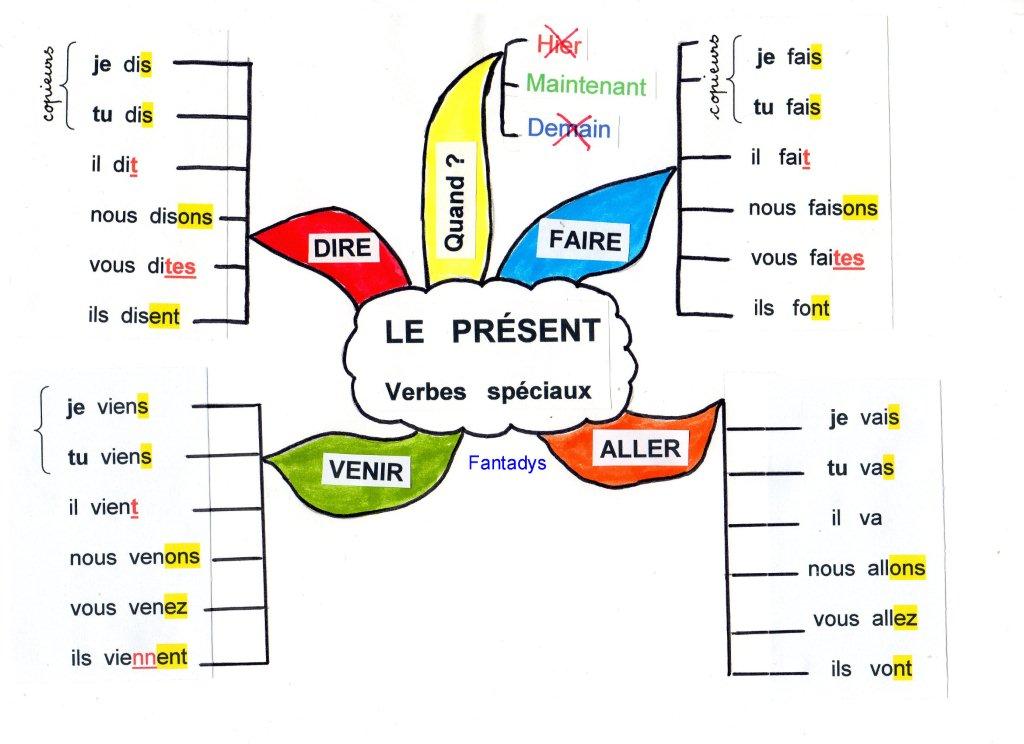
Faire Causative
Faire + an infinitive is called the faire causative. It translates to « have something done by someone or cause something to be done by someone, »or « to cause someone to do something. »
Elle répare la voiture. She is fixing the car.
Elle fait réparer la voiture. She is having the car fixed.
Il peint son appartement. He’s painting his apartment.
Il fait peindre son appartement. He’s having his apartment painted.
Le chien mange. The dog is eating.
Tu fais manger le dog. You are feeding the dog.
Pour en savoir plus
As you can see not all these verbs are ending with -RE.
There are approximately 350 3rd group verbs.
Here is the list!
Verbs in bold have the same endings as the others below them. (more…)
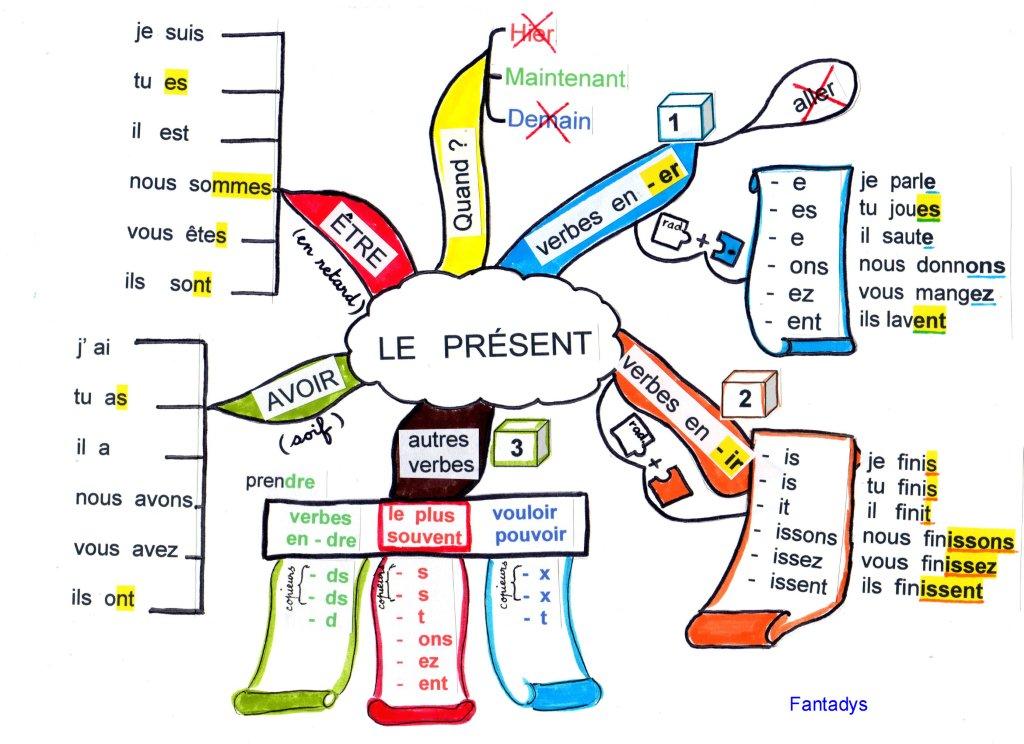
aller(to go) should be a 1st group verb but it is an irregular verb; therefore it is a 3rd group verb: (more…)
I am not sure how useful this list is, quite a few of these verbs are so rarely used and so obscure…. but since I have it, i thought I may as well share it with you.
Comme pour les verbes réguliers (-er), la recette est simple.
Il faut extraire la racine en coupant IR
finir devient fin
rougir devient roug (more…)
Les Verbes réguliers. Premier groupe
About 80% of the French verbs belong to this group.
If you need more explanations, (more…)

In the following expressions, the French use Avoir when the English equivalents take « to be. » (more…)
Again simple procedure.
je s
tu s
il/elle –
nous ons
vous ez
ils/elles ent
That’s it. Look at some more examples. (more…)


 Entre Nous